
-
Research Services<a class="dhimg1" href="/shichangdetail1/9.html" target="_self" rel="nofollow"> <img src="https://omo-oss-image.thefastimg.com/portal-saas/pg2026042316544414203/cms/image/8926ff01-64bc-4928-a995-396bdb9d8102.jpg" alt="Aniphe BioLab"> </a> <a class="dhimg2" href="/shichangdetail/8.html" target="_self" rel="nofollow"> <img src="https://omo-oss-image.thefastimg.com/portal-saas/pg2026042316544414203/cms/image/26342b34-4f1e-4d28-9166-7b685e6d70c3.jpg" alt="Aniphe BioLab"> </a>


-
Preclinical CRO<a class="dhimg1" href="/shichangdetail/6.html" target="_self" rel="nofollow"> <img src="https://omo-oss-image.thefastimg.com/portal-saas/pg2026042316544414203/cms/image/cc43bac1-07d9-4340-9677-fbe01c51330a.jpg" alt="Aniphe BioLab"> </a> <a class="dhimg2" href="/shichangdetail/10.html" rel="nofollow" target="_self"> <img src="https://omo-oss-image.thefastimg.com/portal-saas/pg2026042316544414203/cms/image/f1d8f739-0d36-4cb8-adeb-26de791d909c.jpg" alt="Aniphe BioLab"> </a>


-
-
-
-


Publish an article
Morris water maze
The Morris water maze (MWM) is an experimental paradigm in which rodents—rats or mice—are compelled to swim and learn to locate a submerged platform hidden beneath the water’s surface. It is primarily used to assess the animals’ spatial learning and memory, particularly their ability to acquire and retain information about spatial location and orientation. One of its key components is the water tank; the tank’s quality and functionality are indispensable to the experiment, with water temperature serving as a critical parameter. The MWM is widely employed across numerous scientific disciplines—including research on learning and memory, Alzheimer’s disease, hippocampal and extra‑hippocampal processes, intelligence and aging, new drug development, screening, and evaluation, pharmacology, toxicology, preventive medicine, neurobiology, animal psychology, and behavioral biology—as well as in computer‑assisted instruction.
Experiment description: 1 day for acclimatization, 5 days of training, 1 day of testing, and 1 day for data analysis.
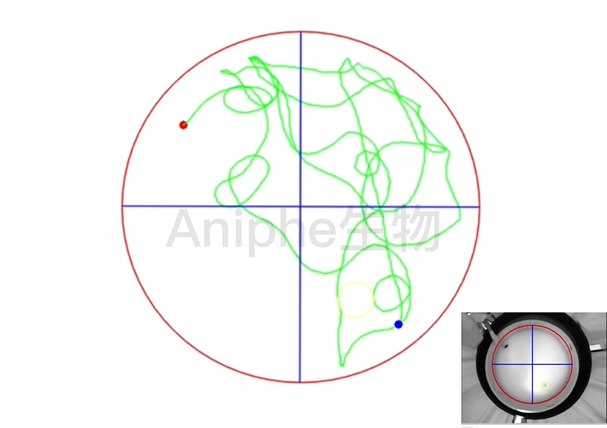
Image source: Aniphe BioLab
Jiangsu Aniphe BioLab Inc., established in 2018, is committed to becoming an internationally renowned preclinical pharmacodynamic evaluation company in the new era of biopharmaceutical development. Aniphe BioLab has built a comprehensive SPF‑grade laboratory animal facility that integrates animal breeding and husbandry, disease model development, and animal experimentation, covering areas such as oncology, neuroscience, and metabolism.
With over 5,000 mouse and rat cages at its disposal, and backed by a highly skilled technical team and an extensive animal resource pool, Aniphe BioLab offers a wide array of disease‑specific animal models, including cerebral ischemia–reperfusion models in mice and rats (MACO/R), myocardial infarction and myocardial ischemia models (MI), transverse aortic constriction (TAC) models, patient‑derived xenograft (PDX) tumor models, cell‑line‑derived xenograft (CDX) tumor models, spinal cord injury (SCI) models, epilepsy models, Alzheimer’s disease (AD) models, and more. We also provide pharmacological and efficacy evaluation services tailored to these disease models. We warmly welcome inquiries from all interested clients!
Aniphe BioLab Inc.
Address:
Runcheng, No. 8 Longtai Road, Jiangbei New Area, Nanjing City, Jiangsu Province
Building 8, Science Park
Postal Code: 210007
Phone:025-8520 8061
Email:info@aniphebio.com(Consultation)
Email:order@aniphebio.com(Order)


WeChat Official Account
Video Account
 Su Public Security Bureau Internet Information Service Filing No. 32010402001421