
-
Research Services<a class="dhimg1" href="/shichangdetail1/9.html" target="_self" rel="nofollow"> <img src="https://omo-oss-image.thefastimg.com/portal-saas/pg2026042316544414203/cms/image/8926ff01-64bc-4928-a995-396bdb9d8102.jpg" alt="Aniphe BioLab"> </a> <a class="dhimg2" href="/shichangdetail/8.html" target="_self" rel="nofollow"> <img src="https://omo-oss-image.thefastimg.com/portal-saas/pg2026042316544414203/cms/image/26342b34-4f1e-4d28-9166-7b685e6d70c3.jpg" alt="Aniphe BioLab"> </a>


-
Preclinical CRO<a class="dhimg1" href="/shichangdetail/6.html" target="_self" rel="nofollow"> <img src="https://omo-oss-image.thefastimg.com/portal-saas/pg2026042316544414203/cms/image/cc43bac1-07d9-4340-9677-fbe01c51330a.jpg" alt="Aniphe BioLab"> </a> <a class="dhimg2" href="/shichangdetail/10.html" rel="nofollow" target="_self"> <img src="https://omo-oss-image.thefastimg.com/portal-saas/pg2026042316544414203/cms/image/f1d8f739-0d36-4cb8-adeb-26de791d909c.jpg" alt="Aniphe BioLab"> </a>


-
-
-
-


Latest News
Focusing on cutting-edge technologies and research advancements,
sharing Aniphe BioLab’s achievements in scientific innovation,
Professional insights
and practical experience in the fields of laboratory animals and preclinical research.
Publish an article
Customer Article | Nature Communications (IF = 12.121): Senescent-like macrophages mediate endplate‑induced vascularization in male mice via IL‑10 secretion
Low Back Pain (LBP) It is a global health issue that severely impacts patients’ quality of life and imposes substantial burdens on healthcare resources and costs.
The cartilaginous endplate is situated between the nucleus pulposus and the vertebral body; subjected to high shear stresses, it is prone to degeneration and injury. With aging or in the presence of other degenerative conditions, the cartilaginous endplate progressively undergoes sclerosis. Magnetic resonance imaging (MRI) findings of bone marrow lesions within the endplate are referred to as “Modic changes” (MC) and are strongly predictive of low back pain.
In earlier work, the team led by Ni Shuangfei at the First Affiliated Hospital of Zhengzhou University identified endplate sclerosis in lumbar spine instability (LSI) and aging models, demonstrating that spinal pain is driven by sensory innervation of the porous regions of the sclerotic endplates. Recently, in… Nature Communications Published in the magazine “ Senescent-like macrophages mediate angiogenesis for endplate sclerosis via IL-10 secretion in male mice. Further reports indicate that senescent-like macrophages accumulate in the sclerotic vertebral laminae of an aged mouse model. Moreover, knockout of Cdkn2a (p16) in macrophages abolishes angiogenesis and sclerosis in the vertebral laminae induced by aging or spinal instability (LSI).

Both in vivo and in vitro studies have demonstrated that IL‑10 is the predominant cytokine upregulated in the senescence‑associated secretory phenotype (SASP). Mechanistically, IL‑10 enhances pSTAT3 expression in endothelial cells, enabling pSTAT3 to directly bind to the promoters of Vegfa, Mmp2, and Pdgfb, thereby promoting their transcription and driving angiogenesis.
Research findings
| CD31Emcn: The Coupling of Vasculature with LSI and Endplate Sclerosis in Aged Mice
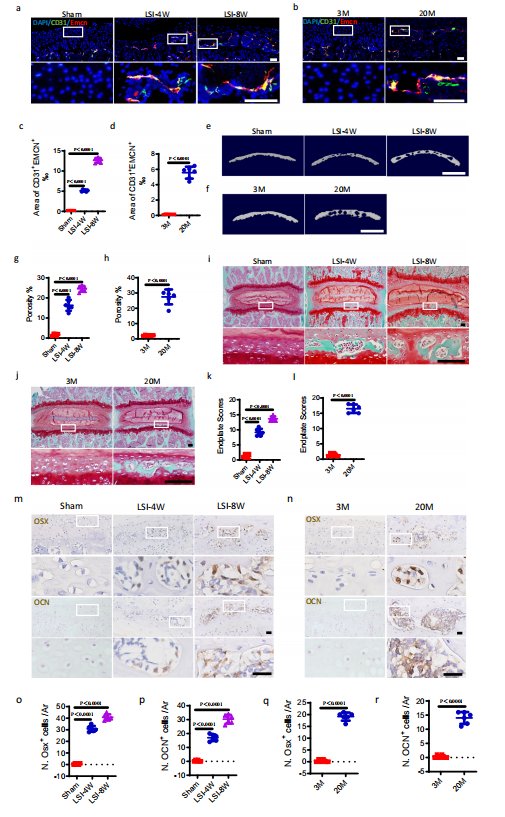
The authors first investigated the role of CD31+Emcn+ vessels in endplate sclerosis associated with lumbar spinal instability (LSI) or aging in mice. Using immunofluorescence, three-dimensional micro-computed tomography (micro-CT), and ponceau S–fast green staining, they demonstrated that the endplates undergo increased osteogenesis during degeneration, and that CD31+Emcn+ vessels are present in the sclerotic endplates of both LSI‑affected and aged mice.
| Senescent cells accumulate in the sclerotic endplates of LSI mice and aged mice.
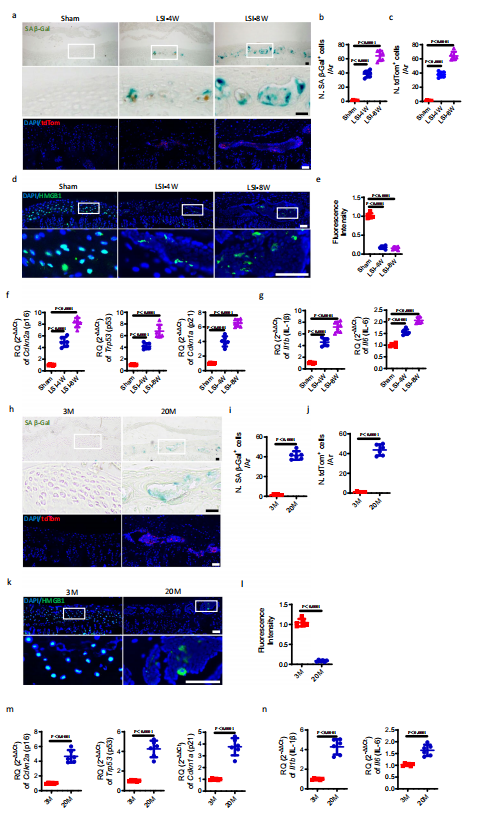
Using senescence-reporting transgenic mice (Cdkn2a) (p16) tdTom , revealing that the number of tdTom+ cells in the endplate significantly increases after LSI. Data obtained through SA-βGal staining, immunofluorescence staining, and qRT-PCR demonstrate that LSI induces senescence in endplate cells, and that the endplate itself undergoes cellular senescence with advancing age.
| Senescent cell clearance in LSI and aged mice delays endplate sclerosis.
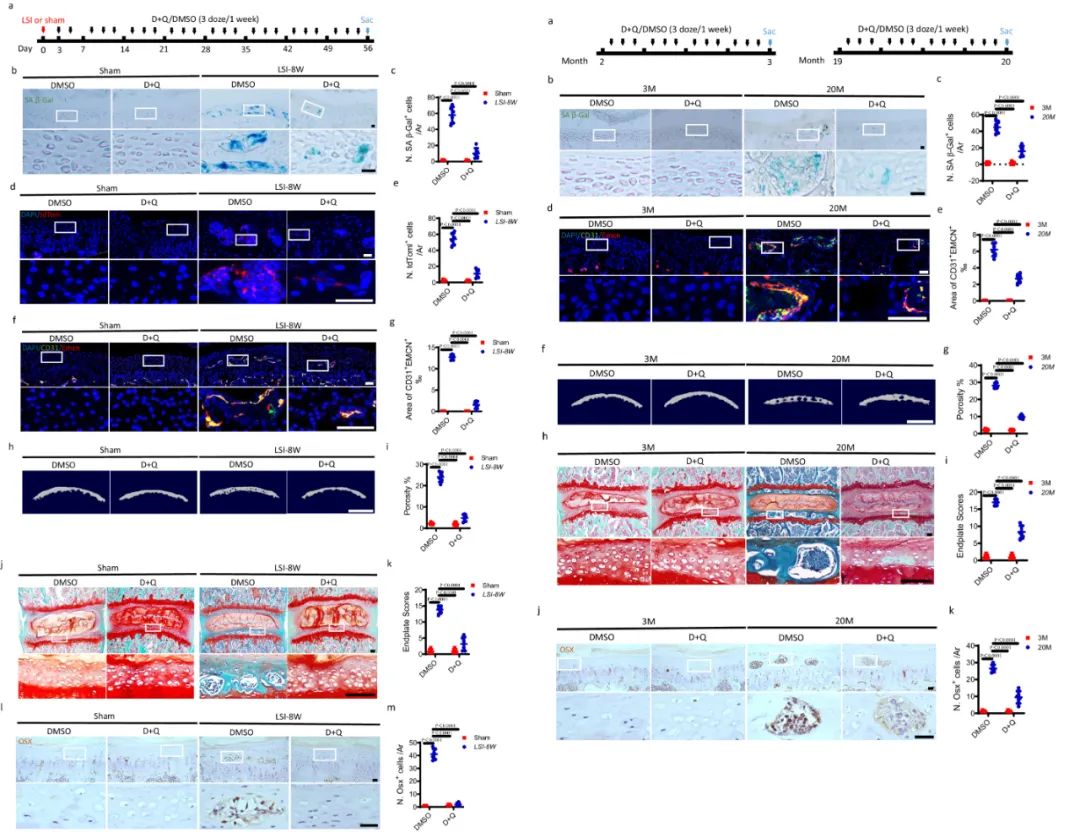
Dasatinib plus quercetin (D+Q) is a well‑characterized and widely recognized senolytic agent. Researchers administered D+Q to both LSI‑treated mice and aged mice.
| Abundant macrophages undergo senescence in the endplates of LSI mice and aged mice.
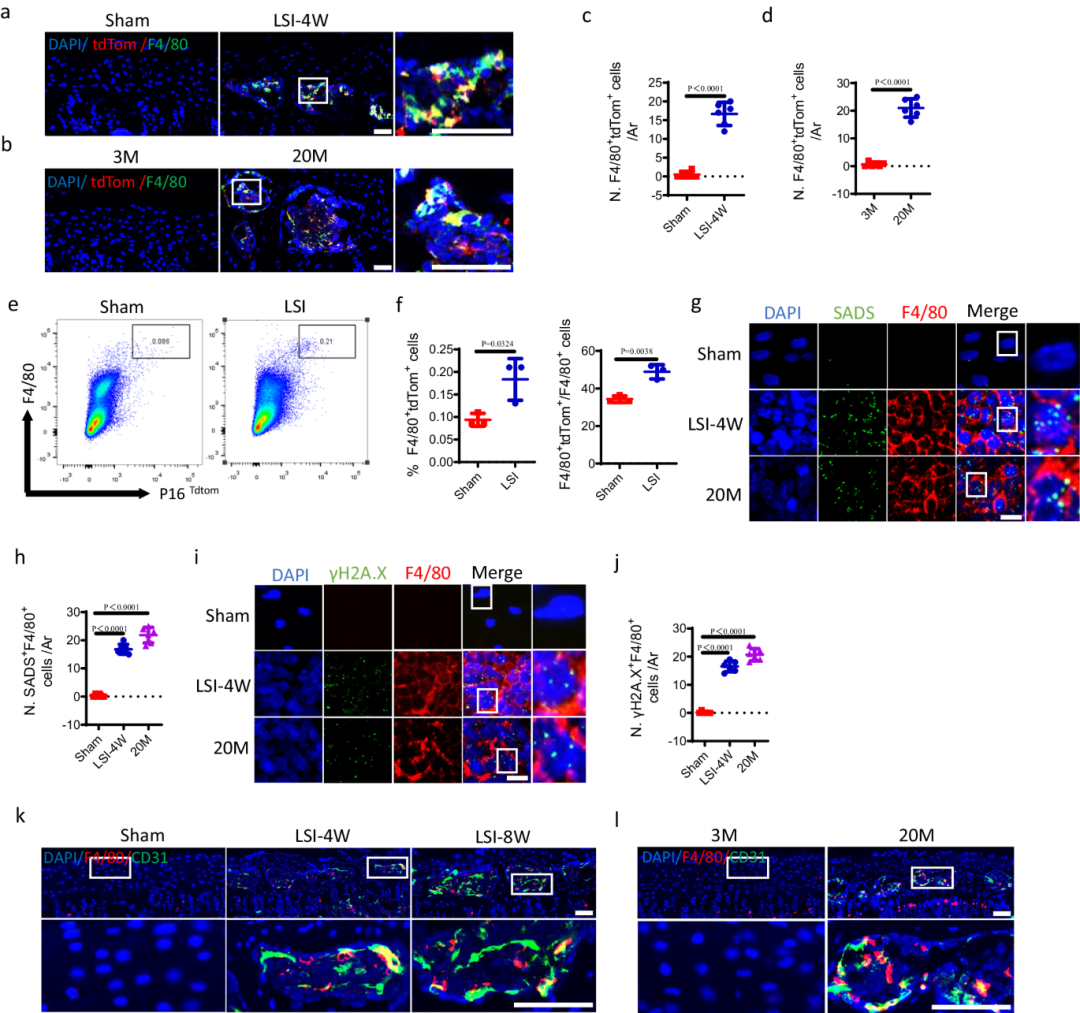
Immunofluorescence co‑labeling and flow cytometry demonstrated that senescent macrophages undergo senescence in degenerated endplates, potentially contributing to angiogenesis and endplate sclerosis within the endplate.
Knocking out cdkn2a (p16) in Lyz2+ cells abolishes endplate sclerosis.
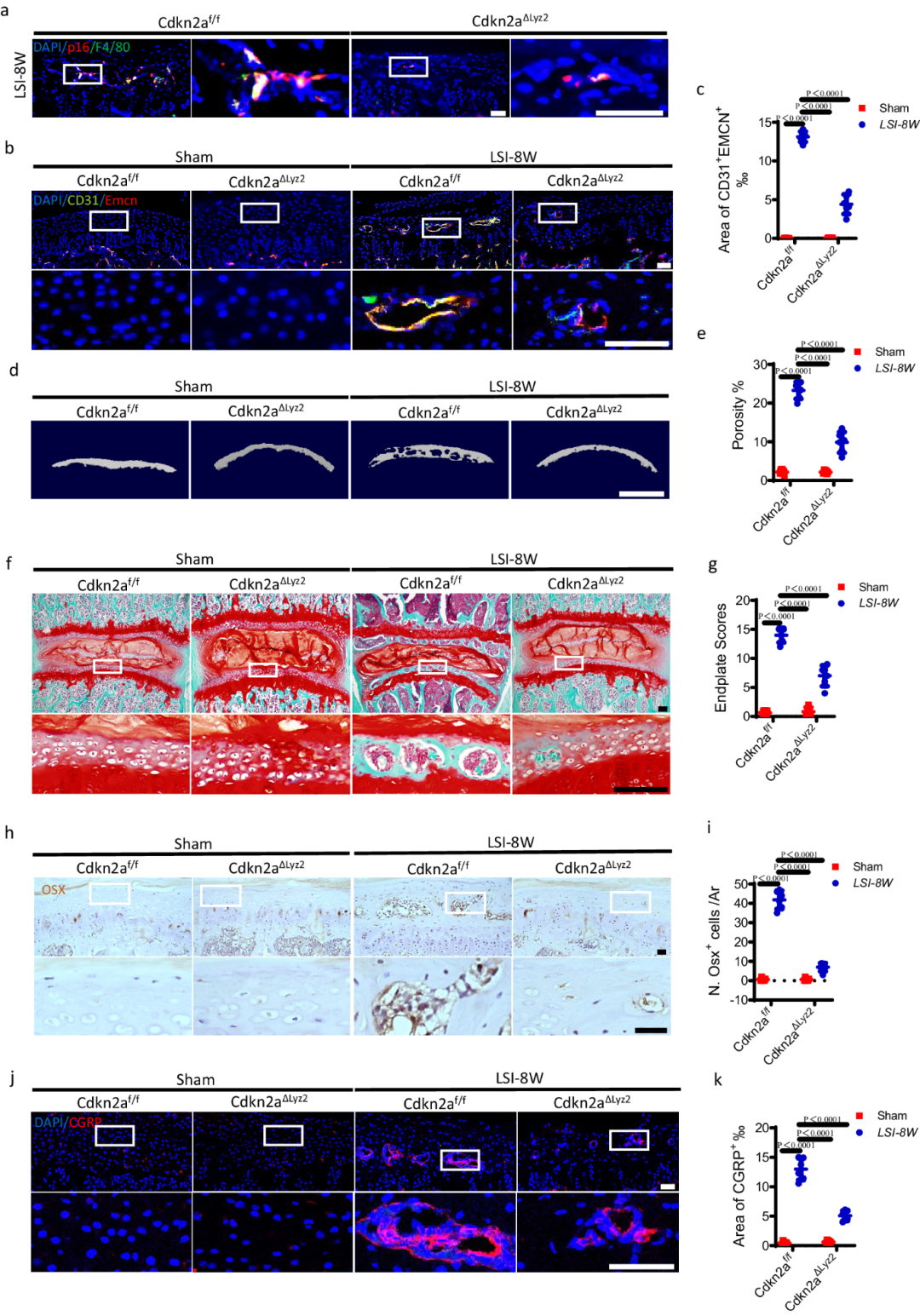
To further elucidate the role of senescent-like macrophages in endplate sclerosis, the researchers crossed Lyz2-Cre mice with Cdkn2a (p16) Flox mice, generating a conditional knockout mouse model in which Cdkn2a is specifically deleted in Lyz2-positive cells (Cdkn2a ΔLyz2 ).
Immunofluorescence, micro-CT, and ponceau S–fast green staining results demonstrated that specific knockout of Cdkn2a in Lyz2+ cells inhibits LSI‑mediated angiogenesis and sclerotic changes in the vertebral endplates.
| Macrophage deficiency suppresses LSI or senescence‑induced endplate sclerosis.
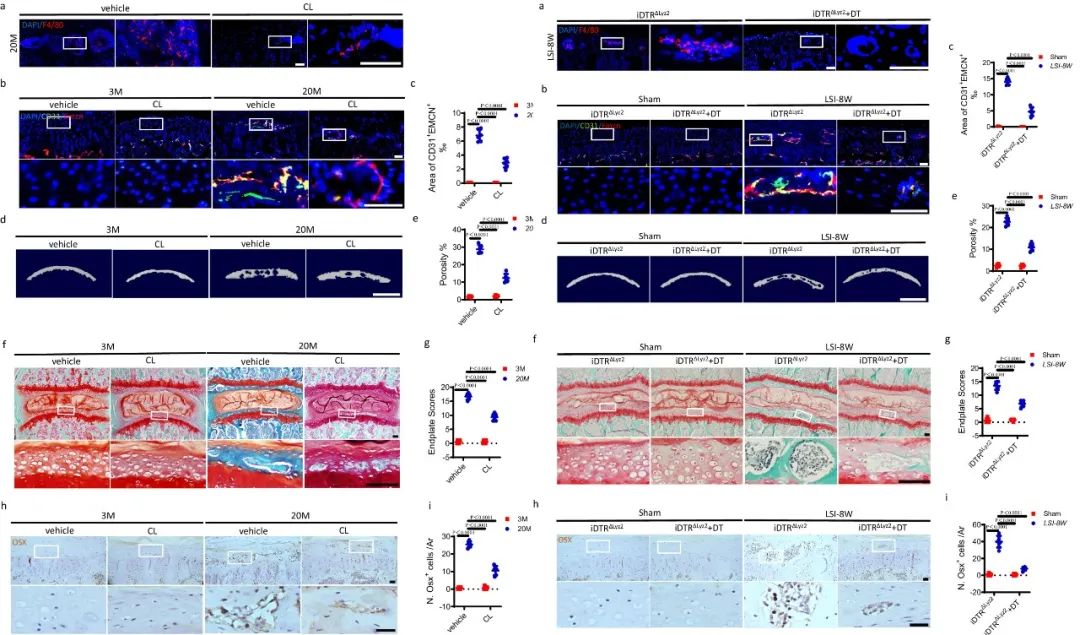
The study found that the macrophage-depleting solution CL can prevent aging‑induced endplate angiogenesis and sclerosis. Furthermore, genetic or pharmacological depletion of macrophages in LSI‑treated mice or aged mice reduces the number of Trap‑positive osteoclasts in the endplates.
| IL-10 secreted by senescent-like macrophages promotes angiogenesis in degenerative endplates.
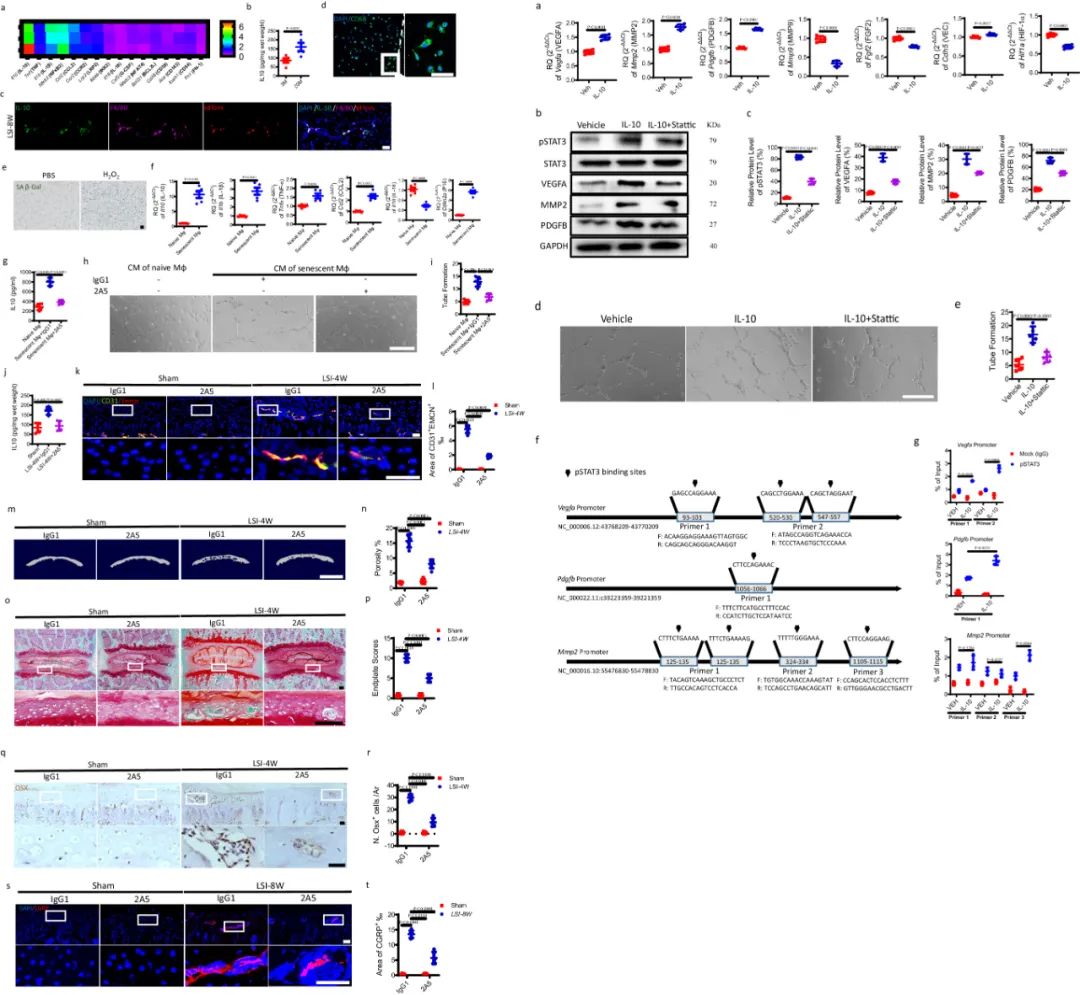
To further investigate the signaling pathways underlying IL‑10‑mediated angiogenesis, we first selected several angiogenesis‑related factors. qRT‑PCR, Western blot, and ChIP assays demonstrated that IL‑10 promotes the expression of VEGFA, MMP2, and PDGFB in endothelial cells via the pSTAT3/STAT3 signaling pathway, thereby facilitating angiogenesis.
Summary
This study has deepened our understanding of the relationships among immune senescence, angiogenesis, and endplate sclerosis, and it reveals that endplate sclerosis driven by senescent macrophages may represent a potential therapeutic target for spinal degeneration. These findings offer new insights into the link between immune senescence and vertebral endplate sclerosis and hold significant implications for the development of novel treatments.
The 2–19-month-old C57BL/6J mice used in the aging experiments were provided by Aniphe BioLab.
PREVIOUS:
Aniphe BioLab Inc.
Address:
Runcheng, No. 8 Longtai Road, Jiangbei New Area, Nanjing City, Jiangsu Province
Building 8, Science Park
Postal Code: 210007
Phone:025-8520 8061
Email:info@aniphebio.com(Consultation)
Email:order@aniphebio.com(Order)


WeChat Official Account
Video Account
 Su Public Security Bureau Internet Information Service Filing No. 32010402001421