
-
Research Services<a class="dhimg1" href="/shichangdetail1/9.html" target="_self" rel="nofollow"> <img src="https://omo-oss-image.thefastimg.com/portal-saas/pg2026042316544414203/cms/image/8926ff01-64bc-4928-a995-396bdb9d8102.jpg" alt="Aniphe BioLab"> </a> <a class="dhimg2" href="/shichangdetail/8.html" target="_self" rel="nofollow"> <img src="https://omo-oss-image.thefastimg.com/portal-saas/pg2026042316544414203/cms/image/26342b34-4f1e-4d28-9166-7b685e6d70c3.jpg" alt="Aniphe BioLab"> </a>


-
Preclinical CRO<a class="dhimg1" href="/shichangdetail/6.html" target="_self" rel="nofollow"> <img src="https://omo-oss-image.thefastimg.com/portal-saas/pg2026042316544414203/cms/image/cc43bac1-07d9-4340-9677-fbe01c51330a.jpg" alt="Aniphe BioLab"> </a> <a class="dhimg2" href="/shichangdetail/10.html" rel="nofollow" target="_self"> <img src="https://omo-oss-image.thefastimg.com/portal-saas/pg2026042316544414203/cms/image/f1d8f739-0d36-4cb8-adeb-26de791d909c.jpg" alt="Aniphe BioLab"> </a>


-
-
-
-


Latest News
Focusing on cutting-edge technologies and research advancements,
sharing Aniphe BioLab’s achievements in scientific innovation,
Professional insights
and practical experience in the fields of laboratory animals and preclinical research.
Publish an article
APP/PS1 transgenic mice: black or gray? Does coat color affect experimental outcomes?
In the field of Alzheimer’s disease (AD) research, APP/PS1 double-transgenic mice They are indispensable “model organisms” for scientists. These models are engineered to express disease‑associated mutations in human familial Alzheimer’s disease genes—namely the amyloid precursor protein (APP) and presenilin 1 (PS1)—thereby accelerating the formation of β‑amyloid (Aβ) plaques in the brain and recapitulating the core pathological hallmarks of the disease.
For more detailed information, please refer to previous introductions.
Key Information | APP/PS1 Double-Transgenic Mice: Cognitive Function, Hippocampal Aβ, and Telomere Length—Everything You Want to Know Is Right Here! _ Jiangsu Aniphe BioLab Co., Ltd.If you’ve worked with this strain, you’ll notice that even among APP/PS1 mice, there are two distinct coat colors: black and agouti gray.

To begin with the conclusion: the coat color differences (black versus gray) observed in APP/PS1 transgenic mice arise from the hybrid nature of their genetic background strains, but… Coat color itself does not directly affect the core pathological processes of Alzheimer’s disease (AD). 。
| Coat Color Characteristics of the Base Strain
The ASIP gene is a key genetic determinant of coat color in animals, primarily influencing hair coloration by regulating the synthesis and distribution of melanin.
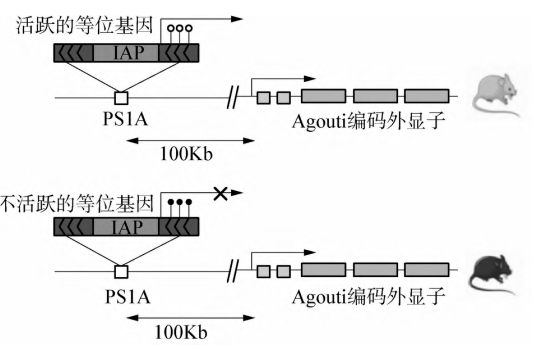
Image source: [1]
C57BL/6 (B6):
C57BL/6 (B6) inbred mice, The standard coat color is black. Its coat color is primarily determined by the following genotypes:
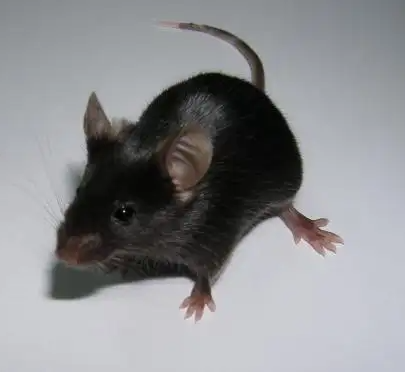
A Locus (ASIP gene): Typically, it is a/a (recessive homozygous), allowing eumelanin (black/brown pigment) to be expressed throughout the body.
B Locus (TYRP1 gene): Typically, it is B/B (homozygous dominant), resulting in black eumelanin.
C Locus (TYR gene): Typically, it is C/C (homozygous dominant), with normal tyrosinase activity and sufficient melanin synthesis.
Therefore, B6 is the standard black mouse (a/a, B/B, C/C). 。
C3H/HeJ (C3H):
C3H/HeJ (C3H) inbred mice, with a standard coat color of Agouti (mouse gray) . Its key coat-color genotype is:
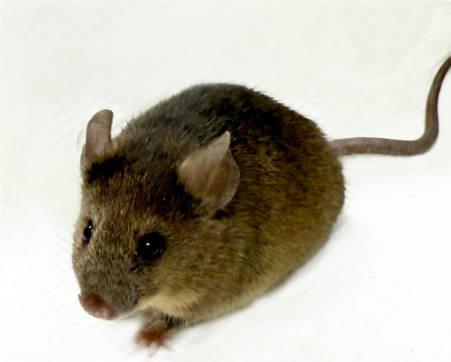
Image source: Aniphe BioLab
A Locus (ASIP gene): A/A or A/a (dominant). The ASIP protein inhibits eumelanin synthesis, resulting in a “banded” appearance of the hair shaft—black at the tip, yellow/brown along the midshaft, and gray at the root—which is a hallmark of the “mouse‑gray” phenotype.
Therefore, C3H is the standard mouse gray color (A/A or A/a).
| The root cause of coat color segregation
In the C57BL/6;C3H hybrid background, the key genes determining coat color—particularly the A locus and the B locus—are not fixed homozygous within the population.
A Locus (ASIP gene) is key:
B6 contributes the a allele (recessive, permitting black coloration throughout the body).
C3H contributes the A allele (dominant, resulting in gray fur in mice).
In a breeding population with mixed backgrounds:

Image source: Aniphe BioLab
If a mouse inherits the a allele from both parents (a/a), the ASIP protein is either not expressed or nonfunctional, allowing eumelanin to be expressed throughout the body (with coat color determined by the B locus).
If a mouse inherits at least one A allele (A/A or A/a), the ASIP protein becomes active, inhibiting eumelanin synthesis and resulting in yellow/brown bands along the hair shaft, giving rise to the agouti coat color.
| Impact on research—coat color is unrelated to AD pathology
The coat color gene (A or a allele) is located on a different chromosome and is independent of the integration sites of the APP and PS1 transgenes.
Black or mouse‑gray APP/PS1 mice, so long as they carry the transgene, will develop the expected Aβ plaque pathology and associated cognitive deficits. Coat color is merely a visible, randomly segregating marker within the background genome.
Both coat-color variants of mice serve as valid AD models, and the difference in coat color itself does not compromise their core utility in recapitulating Aβ pathology.
Summary
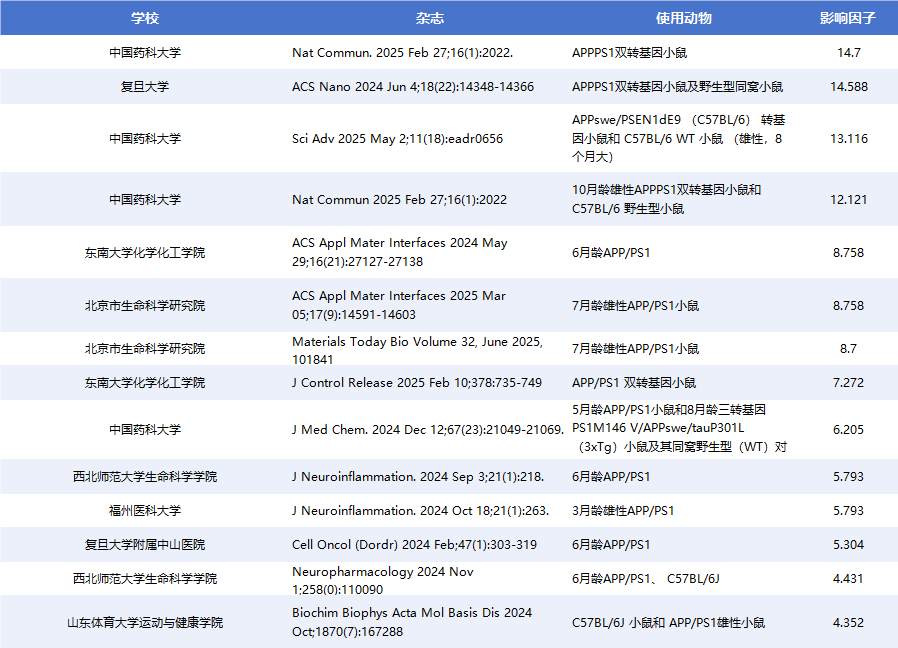
Display of selected project articles
References:
[1] Zheng Linan, Yu Ruwang. Epigenetic Molecular Mechanisms of Mouse Coat Color [J]. Biology Teaching, 2024, 49(11): 2–4.
[2] He Xiaodan. Analysis of the Association Between the Agouti Gene and Coat Color Phenotype in Mice, and Investigation of Its Genetic Variations [D]. Donghua University, 2014.
Aniphe BioLab Inc.
Address:
Runcheng, No. 8 Longtai Road, Jiangbei New Area, Nanjing City, Jiangsu Province
Building 8, Science Park
Postal Code: 210007
Phone:025-8520 8061
Email:info@aniphebio.com(Consultation)
Email:order@aniphebio.com(Order)


WeChat Official Account
Video Account
 Su Public Security Bureau Internet Information Service Filing No. 32010402001421