
-
Research Services<a class="dhimg1" href="/shichangdetail1/9.html" target="_self" rel="nofollow"> <img src="https://omo-oss-image.thefastimg.com/portal-saas/pg2026042316544414203/cms/image/8926ff01-64bc-4928-a995-396bdb9d8102.jpg" alt="Aniphe BioLab"> </a> <a class="dhimg2" href="/shichangdetail/8.html" target="_self" rel="nofollow"> <img src="https://omo-oss-image.thefastimg.com/portal-saas/pg2026042316544414203/cms/image/26342b34-4f1e-4d28-9166-7b685e6d70c3.jpg" alt="Aniphe BioLab"> </a>


-
Preclinical CRO<a class="dhimg1" href="/shichangdetail/6.html" target="_self" rel="nofollow"> <img src="https://omo-oss-image.thefastimg.com/portal-saas/pg2026042316544414203/cms/image/cc43bac1-07d9-4340-9677-fbe01c51330a.jpg" alt="Aniphe BioLab"> </a> <a class="dhimg2" href="/shichangdetail/10.html" rel="nofollow" target="_self"> <img src="https://omo-oss-image.thefastimg.com/portal-saas/pg2026042316544414203/cms/image/f1d8f739-0d36-4cb8-adeb-26de791d909c.jpg" alt="Aniphe BioLab"> </a>


-
-
-
-


Latest News
Focusing on cutting-edge technologies and research advancements,
sharing Aniphe BioLab’s achievements in scientific innovation,
Professional insights
and practical experience in the fields of laboratory animals and preclinical research.
Publish an article
Don’t get lost when administering drugs to mice—choose the appropriate route of administration to obtain reliable experimental data.
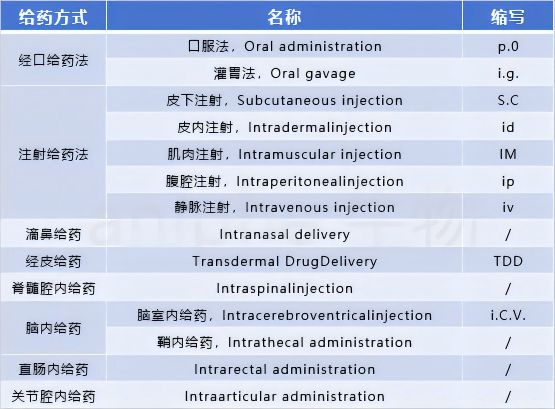
Route of administration
| Oral administration
① Oral administration
② Gavage administration
Route of drug circulation:
Fixing the mouse:
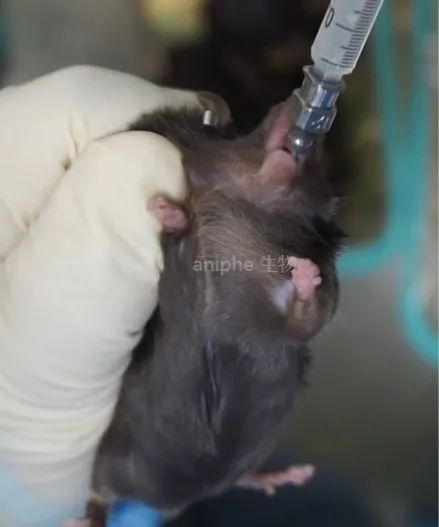
Image source: Aniphe BioLab
Needle insertion:
Note: If you encounter resistance or the animal struggles vigorously, it indicates that the needle has been inserted in the wrong location; immediately stop advancing the needle or withdraw it, and attempt again once the animal has calmed down.
| Injectable administration
① Intraperitoneal injection
An injection technique in which the drug is administered outside the serosa of the gastrointestinal tract and within the peritoneal cavity.
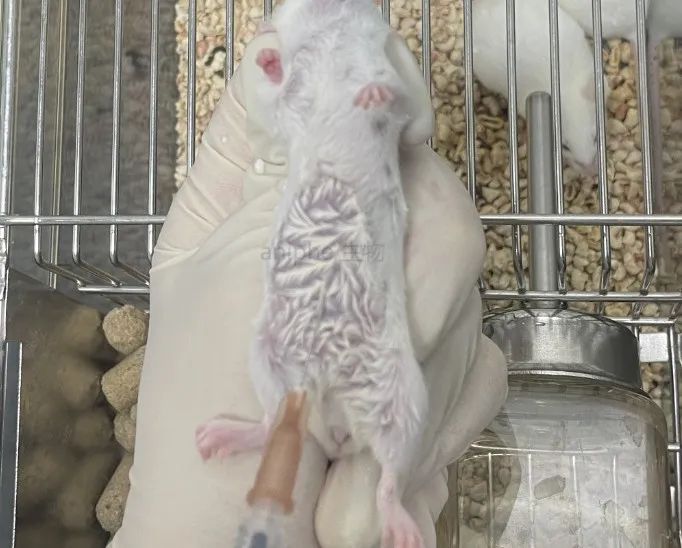
Image source: Aniphe BioLab
Secure the rats and mice in a straight line, with the mouse’s head positioned lower than its tail, to facilitate cephalic organ relocation.
Disinfect the abdominal injection site of rats and mice with an alcohol swab, moving against the direction of hair growth.
Hold the syringe, insert it into the abdomen of the mouse or rat, and advance the needle at approximately a 45° angle into the peritoneal cavity. The insertion depth should be less than 1 cm. During insertion, you should feel a “loss of resistance,” and upon aspiration, no urine or blood should be observed.
Slowly inject the drug solution, ensuring that the entire dose is delivered into the peritoneal cavity of both mice and rats.
Please ensure the correct needle insertion site for both mice and rats:
At the intersection of the midline and the penultimate pair of nipples, on either the left or right side—typically, the right side is chosen for needle insertion in mice, as the right abdomen contains the small intestine and is less likely to puncture solid organs.
Route of drug circulation:
Absorption into the systemic circulation follows this pathway: superior mesenteric vein → portal vein → liver → hepatic veins → inferior vena cava → right atrium → right ventricle.
Following administration, the compound is not absorbed via the gastrointestinal tract; therefore, intraperitoneal administration does not involve first-pass metabolism in the gut, but hepatic first-pass metabolism still occurs, resulting in lower drug loss compared with gavage.
② Subcutaneous injection
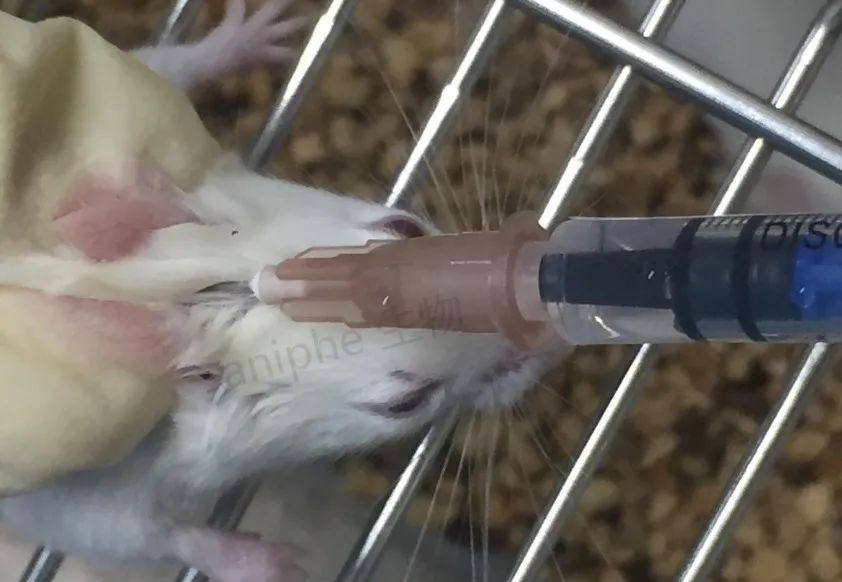
Image source: Aniphe BioLab
Secure the mouse or rat by grasping the head, neck, and dorsal skin with the flexed thumb and index finger of the left hand, while using the palm and the back of the hand to immobilize the animal.
Disinfect the left thumb with an alcohol swab, and pinch the area with the index finger.
With the needle held in the right hand, insert it parallel to the mouse’s body into the skin of the head and neck. Gently move the needle from side to side; if you feel resistance, the needle has entered the subcutaneous tissue. Aspirate to confirm the absence of blood, then slowly inject the drug solution into the subcutaneous space. You may palpate a slight elevation at the injection site between the thumb and index finger.
Note: After needle removal, gently press the puncture site to prevent leakage of the medication and enhance its absorption.
③ Tail vein injection
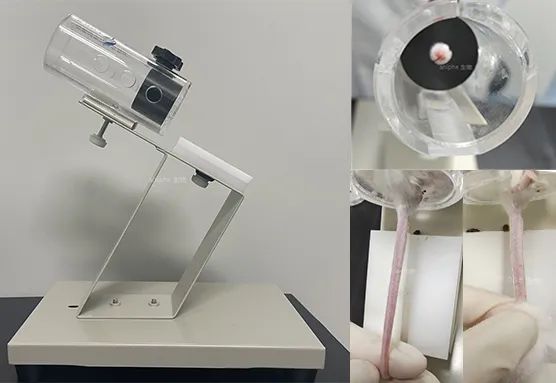
Image source: Aniphe BioLab
Note: When immobilizing rats and mice, be sure to position the fixation clamp so that its small opening aligns with the animal’s nostrils; failure to do so may result in asphyxiation and death.
During injection, position the needle as parallel to the vein as possible, advancing it slowly with the bevel facing upward. The injection should proceed without significant resistance, and the vessel should not become distended or swollen; if either occurs, it indicates that the medication has not been administered.
Intracerebral administration is a stereotactic injection procedure. During stereotactic brain injections, a stereotaxic apparatus is used to immobilize the head, and external cranial landmarks are employed to localize intracranial nuclei, enabling targeted stimulation, lesioning, or drug delivery without exposing the brain. This technique can be applied to establish animal models of Parkinson’s disease, epilepsy, intracranial tumors, and other conditions.
When administering the drug, slowly drip it into the mouse’s nasal opening and allow the animal to inhale it through the nasal cavity (note that the formulation will be absorbed into the nasal passages). Each dose should be sterile and in a small volume; repeat this procedure multiple times until the desired total dose is achieved. Nasal instillation is commonly used as a route of administration when establishing models of asthma, pulmonary arterial hypertension, and other conditions.
It is non-invasive, delivering drugs into the body through the skin, offering convenience and a low rejection rate. Transdermal medications can enter the circulation slowly, bypassing the liver’s first-pass metabolism and thereby enhancing bioavailability.
Similar to a minor surgical procedure, this involves injecting a drug into the subarachnoid space of the spinal canal, primarily used for adeno‑associated virus (AAV) delivery and the treatment of spinal cord injuries.
The drug is administered into the rectum via the anus; rectal administration allows absorption through the intestinal mucosa, bypassing the liver and entering the systemic circulation directly, thereby enhancing the drug’s bioavailability. Rectal administration involves relatively large doses and is commonly used in animal models of colitis.
High-concentration therapeutic agents can be directly delivered into the joint space, typically for the treatment of various musculoskeletal conditions, such as osteoarthritis and rheumatoid arthritis.
Select according to the experimental objective.
Drug studies can generally be categorized into pharmacodynamic studies, pharmacokinetic studies, toxicity studies, and toxicokinetic studies, among others.
| Pharmacological Efficacy Study
When designing pharmacodynamic studies, it is essential to closely align with the intended route of administration in clinical practice and to take into account the drug’s expected therapeutic indications.
For example, intravenous and intraperitoneal injections, owing to their rapid absorption, are particularly well suited for managing emergency situations.
| Pharmacokinetic Study
When assessing the bioavailability of a drug, the choice of administration route is critical. If the study focuses on the oral bioavailability of a drug, intragastric administration in animals should be selected; if the investigation concerns the intraperitoneal bioavailability, intraperitoneal administration should be used directly.
| Toxicity Test
In toxicity studies, particularly acute toxicity assays, the choice of administration route significantly influences both the extent of drug exposure and the rate of absorption, potentially leading to substantial differences in observed toxicological outcomes. Consequently, when conducting toxicity assessments, it is essential to carefully account for the potential variability introduced by different routes of administration.

Image source: Aniphe BioLab
When selecting a route of administration, it is essential to comprehensively consider the drug’s solubility, stability, and toxicity. In some cases, the preferred route of administration dictated by the experimental objective may be constrained by the drug’s properties—for example, if the drug is poorly soluble in injection solutions or if oral administration is likely to irritate the gastrointestinal tract—requiring flexible adjustments.

Selecting and implementing an appropriate route of administration based on the drug’s properties, the experimental objectives, the animal’s health status, and the feasibility of the procedure is a critical step in ensuring the accuracy and reproducibility of experimental results.
Aniphe BioLab Inc.
Address:
Runcheng, No. 8 Longtai Road, Jiangbei New Area, Nanjing City, Jiangsu Province
Building 8, Science Park
Postal Code: 210007
Phone:025-8520 8061
Email:info@aniphebio.com(Consultation)
Email:order@aniphebio.com(Order)


WeChat Official Account
Video Account
 Su Public Security Bureau Internet Information Service Filing No. 32010402001421