
-
Research Services<a class="dhimg1" href="/shichangdetail1/9.html" target="_self" rel="nofollow"> <img src="https://omo-oss-image.thefastimg.com/portal-saas/pg2026042316544414203/cms/image/8926ff01-64bc-4928-a995-396bdb9d8102.jpg" alt="Aniphe BioLab"> </a> <a class="dhimg2" href="/shichangdetail/8.html" target="_self" rel="nofollow"> <img src="https://omo-oss-image.thefastimg.com/portal-saas/pg2026042316544414203/cms/image/26342b34-4f1e-4d28-9166-7b685e6d70c3.jpg" alt="Aniphe BioLab"> </a>


-
Preclinical CRO<a class="dhimg1" href="/shichangdetail/6.html" target="_self" rel="nofollow"> <img src="https://omo-oss-image.thefastimg.com/portal-saas/pg2026042316544414203/cms/image/cc43bac1-07d9-4340-9677-fbe01c51330a.jpg" alt="Aniphe BioLab"> </a> <a class="dhimg2" href="/shichangdetail/10.html" rel="nofollow" target="_self"> <img src="https://omo-oss-image.thefastimg.com/portal-saas/pg2026042316544414203/cms/image/f1d8f739-0d36-4cb8-adeb-26de791d909c.jpg" alt="Aniphe BioLab"> </a>


-
-
-
-


Latest News
Focusing on cutting-edge technologies and research advancements,
sharing Aniphe BioLab’s achievements in scientific innovation,
Professional insights
and practical experience in the fields of laboratory animals and preclinical research.
Publish an article
[Breakthrough in AD Innovative Treatment] Deep Cervical Lymphatic–Venous Anastomosis: A Path of Hope for Patients with Alzheimer’s Disease!
Alzheimer’s disease (AD), also known as senile dementia, is a neurodegenerative disorder of the central nervous system. In addition to cognitive impairments such as memory loss and impaired judgment, patients may experience psychiatric symptoms including personality changes, auditory and visual hallucinations, delusions, and depression. In recent years, the field of Alzheimer’s disease treatment has seen the emergence of an innovative technique—deep cervical lymphatic–venous anastomosis (LVA). This approach offers new hope for patients with AD and opens up novel avenues for its management.
Principle of LVA Treatment Surgery
Deep cervical lymphatic–venous anastomosis, commonly referred to as LVA, where “L” stands for lymphatic, “V” for venous, and “A” for anastomosis.
Basic principle:
It works by establishing anastomoses between lymphatic vessels and veins in the neck, thereby improving the drainage of cerebrospinal fluid, reducing the accumulation of neurotoxins and metabolic waste in the brain, and alleviating the symptoms of Alzheimer’s disease. This procedure not only enhances patients’ cognitive function but also markedly improves their quality of life.

Introduction to Selected Domestic Cases
Lymph is the body’s “cleaner,” responsible for removing bacteria, metabolic waste, and other “debris.” In the past, deep cervical lymphatic–venous anastomosis was primarily used to treat lymphedema. In 2015, a U.S. study first demonstrated the existence of intracranial lymphatic vessels and a lymphatic‑like circulatory system, providing theoretical support for applying deep cervical lymphatic–venous anastomosis to Alzheimer’s disease.
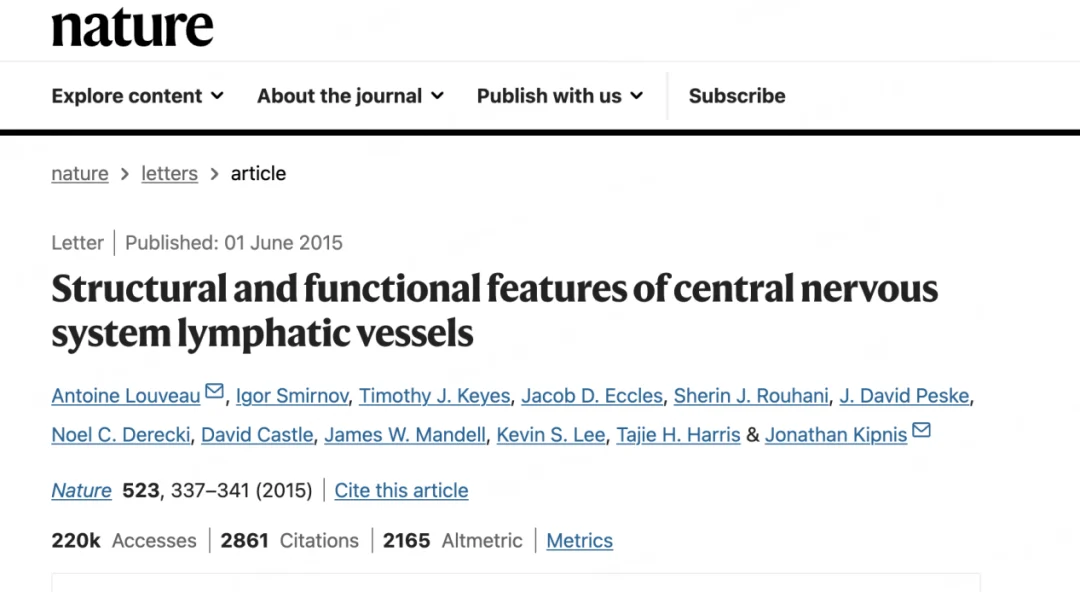
The research team discovered functional lymphatic vessels lining the dural sinuses in mice, a system that transports cerebrospinal fluid and immune cells and connects to the deep cervical lymph nodes. In 2018, the team published a follow-up study in Nature, elucidating the link between impaired meningeal lymphatic drainage and Alzheimer’s disease. Against this backdrop, Professor Xie Qingping’s team at Hangzhou QiuShi Hospital pioneered the use of LVA surgery specifically to ameliorate brain dysfunction associated with Alzheimer’s disease. Since 2020, the team has performed LVA surgery on more than 200 patients, with favorable outcomes observed during ongoing follow-up.
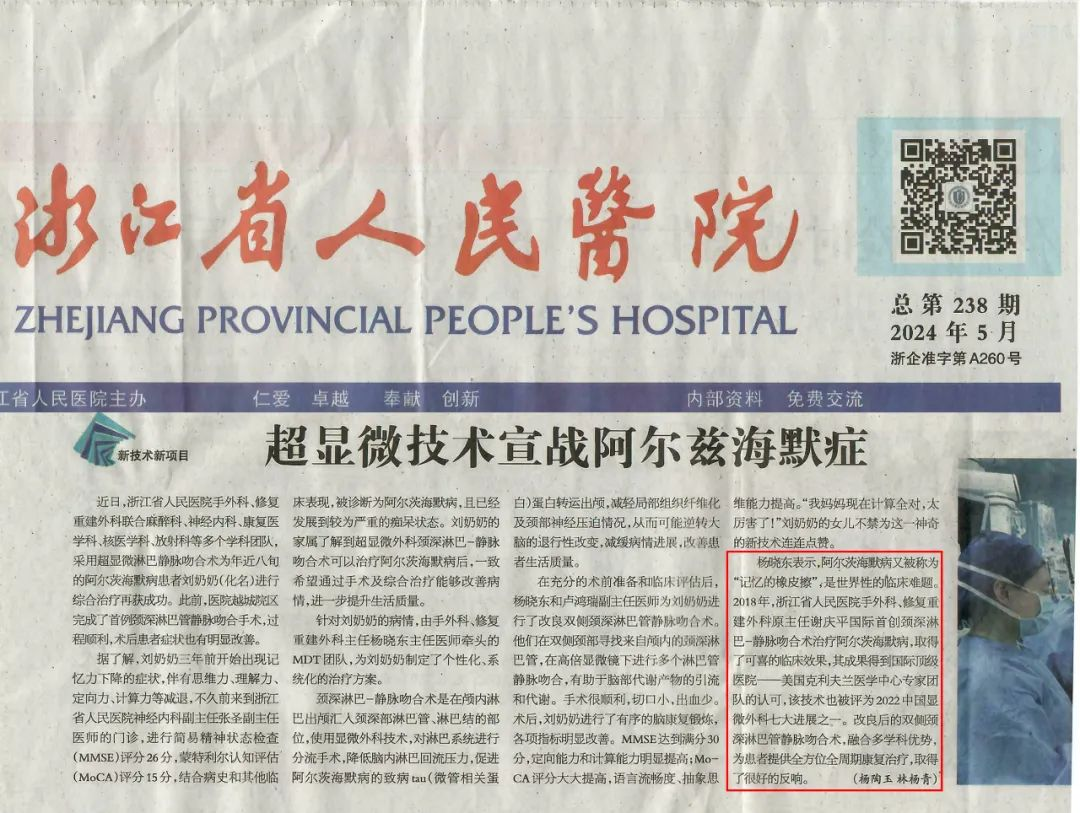
| National Clinical Research Center for Geriatric Diseases (Xiangya Hospital)
In March 2024, the team led by Professor Tang Juyu at the National Clinical Research Center for Geriatric Diseases (Xiangya Hospital) also successfully performed this procedure on an 86-year-old patient with Alzheimer’s disease, resulting in significant symptom relief postoperatively.

Image source: National Clinical Research Center for Geriatric Diseases (Xiangya Hospital)
| The Land Port Campus of the First Affiliated Hospital of Xi’an Jiaotong University
On January 26, 2025, the Lugang Campus of the First Affiliated Hospital of Xi’an Jiaotong University successfully performed a deep cervical lymphatic–venous anastomosis on 78-year-old Ms. Qu, who suffers from Alzheimer’s disease. One week after the surgery, Ms. Qu is already able to recognize her family members.
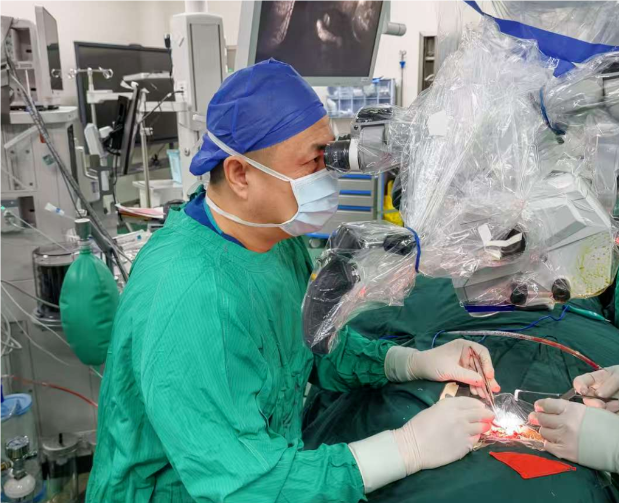
Image source: The First Affiliated Hospital of Xi’an Jiaotong University.
| Jinan Third People’s Hospital
In February 2025, the Third People’s Hospital of Jinan successfully performed bilateral deep cervical lymphatic–venous anastomosis (LVA) on a 67-year-old patient with Alzheimer’s disease. Sixteen hours after the procedure, the patient was able to accurately recall his own name and that of his spouse, his urinary and bowel functions had returned to normal, and his cognitive abilities were steadily improving. On postoperative day five, a follow-up assessment revealed that his MMSE score had risen to 12 points.
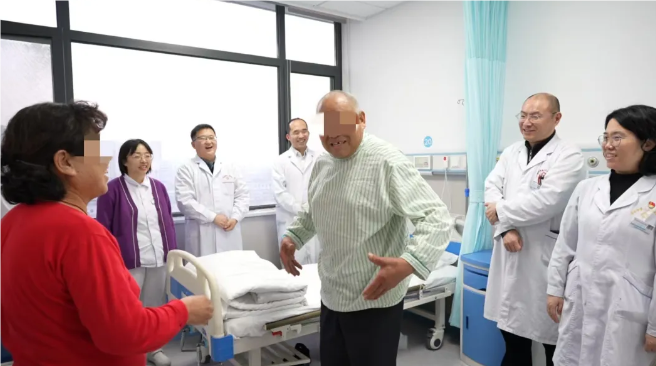
Image source: The Third People’s Hospital of Jinan City
Summary
In animal experiments, dissection allows for real-time observation of brain changes in mice, enabling precise analysis of factors influencing therapeutic efficacy and facilitating targeted adjustments.
“However, this is impossible in ‘living‑person studies’; progress can only be driven by physicians’ long‑term, large‑scale analysis of clinical outcomes.” In the future, as more clinical trials are conducted, deep cervical lymphatic–venous anastomosis holds promise as an important therapeutic approach for Alzheimer’s disease.
For Alzheimer’s disease, Aniphe BioLab offers a variety of animal models, including APP/PS1 (double transgenic), 3×Tg (triple transgenic), and 5×FAD (quintuple transgenic), which can be used for investigating pathogenic mechanisms or conducting pharmacological and efficacy studies. Feel free to inquire!
Aniphe BioLab Inc.
Address:
Runcheng, No. 8 Longtai Road, Jiangbei New Area, Nanjing City, Jiangsu Province
Building 8, Science Park
Postal Code: 210007
Phone:025-8520 8061
Email:info@aniphebio.com(Consultation)
Email:order@aniphebio.com(Order)


WeChat Official Account
Video Account
 Su Public Security Bureau Internet Information Service Filing No. 32010402001421