
-
Research Services<a class="dhimg1" href="/shichangdetail1/9.html" target="_self" rel="nofollow"> <img src="https://omo-oss-image.thefastimg.com/portal-saas/pg2026042316544414203/cms/image/8926ff01-64bc-4928-a995-396bdb9d8102.jpg" alt="Aniphe BioLab"> </a> <a class="dhimg2" href="/shichangdetail/8.html" target="_self" rel="nofollow"> <img src="https://omo-oss-image.thefastimg.com/portal-saas/pg2026042316544414203/cms/image/26342b34-4f1e-4d28-9166-7b685e6d70c3.jpg" alt="Aniphe BioLab"> </a>


-
Preclinical CRO<a class="dhimg1" href="/shichangdetail/6.html" target="_self" rel="nofollow"> <img src="https://omo-oss-image.thefastimg.com/portal-saas/pg2026042316544414203/cms/image/cc43bac1-07d9-4340-9677-fbe01c51330a.jpg" alt="Aniphe BioLab"> </a> <a class="dhimg2" href="/shichangdetail/10.html" rel="nofollow" target="_self"> <img src="https://omo-oss-image.thefastimg.com/portal-saas/pg2026042316544414203/cms/image/f1d8f739-0d36-4cb8-adeb-26de791d909c.jpg" alt="Aniphe BioLab"> </a>


-
-
-
-


Latest News
Focusing on cutting-edge technologies and research advancements,
sharing Aniphe BioLab’s achievements in scientific innovation,
Professional insights
and practical experience in the fields of laboratory animals and preclinical research.
Publish an article
Project Article: J. Med. Chem | Phenotypic Screening and RFD‑Based Synergistic Strategies: In‑Depth Analysis of Multi‑Target Drug Design and Its Application in Alzheimer’s Disease Therapy
Alzheimer’s disease (AD) is a complex neurodegenerative disorder involving multiple pathogenic mechanisms, such as β‑amyloid accumulation and abnormal tau phosphorylation. Conventional drugs typically target a single molecular pathway, resulting in limited efficacy, whereas multi‑target drugs (MTDLs) can simultaneously modulate several targets; however, designing such compounds is extremely challenging and often relies on serendipitous discoveries.
Recently, a team from China Pharmaceutical University has been… Journal of Medicinal Chemistry Published in the magazine “ Polypharmacological Drug Design Guided by Integrating Phenotypic and Restricted Fragment Docking Strategies ” Further reports have described an innovative multi‑pharmacological drug design strategy that integrates phenotypic screening with the Restricted Fragment Docking (RFD) approach, offering new insights and methodologies for Alzheimer’s disease drug discovery.

Key Innovation Points
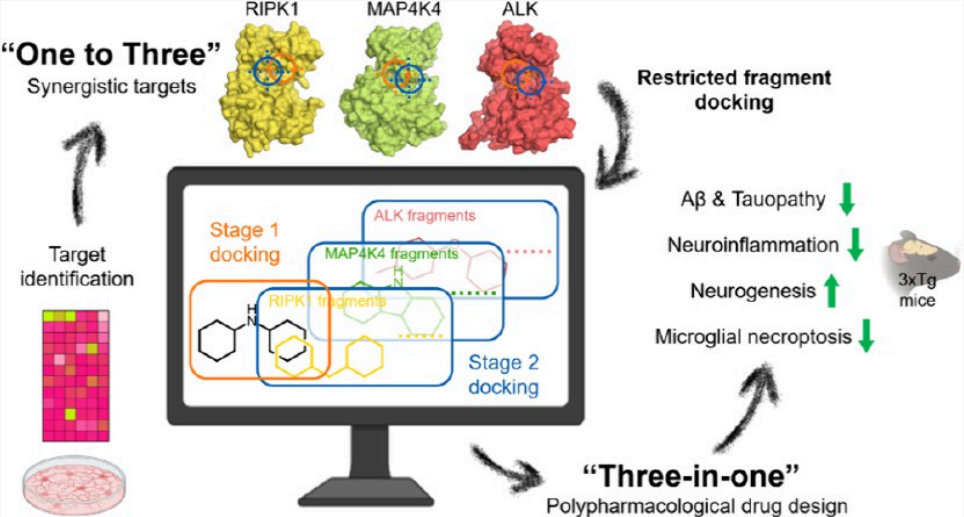
① RFD method : For the first time, phenotypic screening is integrated with fragment docking, enabling the efficient design of multi-target ligands by defining overlapping chemical spaces.
② Target synergy mechanism: This study reveals the synergistic roles of RIPK1, MAP4K4, and ALK in necroptotic cell death of microglia, offering a novel combination of therapeutic targets for Alzheimer’s disease.
③ The pleiotropic effects of LP-10d: A single molecule simultaneously ameliorates Alzheimer’s disease–related pathological hallmarks (Aβ and Tau) and promotes neural regeneration, overcoming the limitations of conventional single‑target drugs.
Research findings
| Construction of disease‑related microglial phenotypes and identification of cooperative targets via mechanism‑based siRNA screening
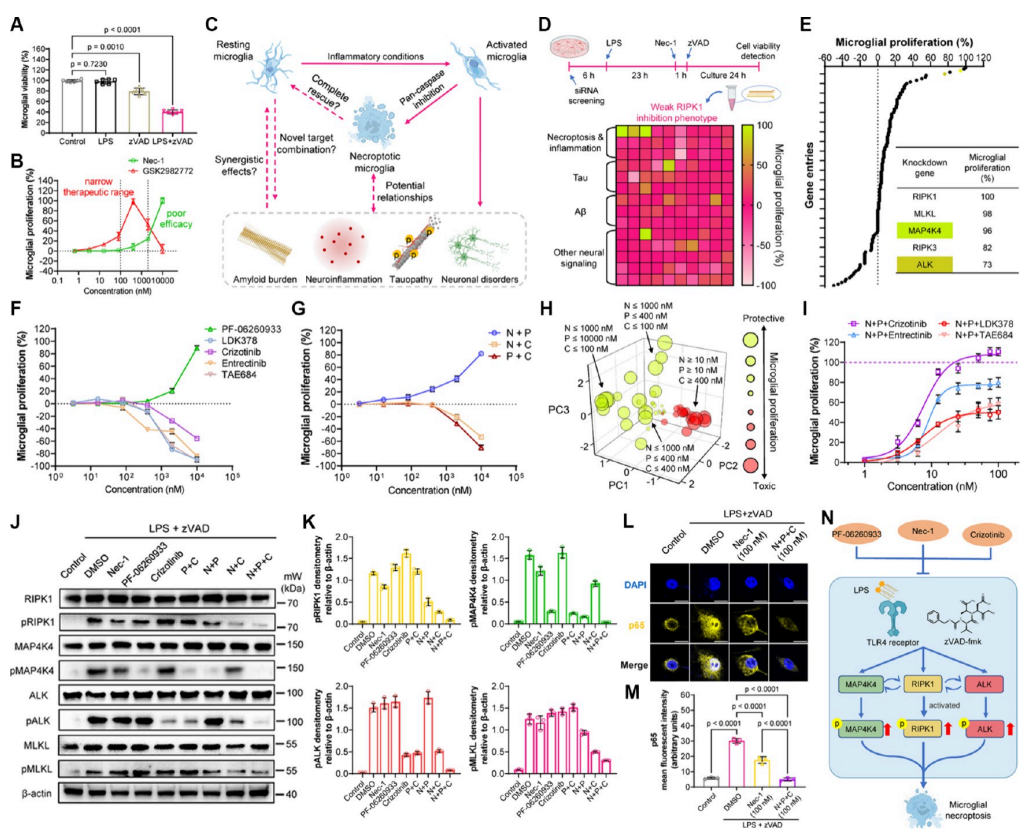
The authors first established a TLR4‑induced necroptotic phenotype in microglia and, through mechanism‑based siRNA screening, identified MAP4K4 and ALK as potential targets that cooperate with RIPK1. Combined treatment with selective inhibitors of RIPK1, MAP4K4, and ALK revealed that multiple low‑dose inhibition regimens can synergistically enhance neuroprotective effects in microglia.
| In the Silico-MTDL design, constrained fragment docking is employed to simultaneously target RIPK1, MAP4K4, and ALK.
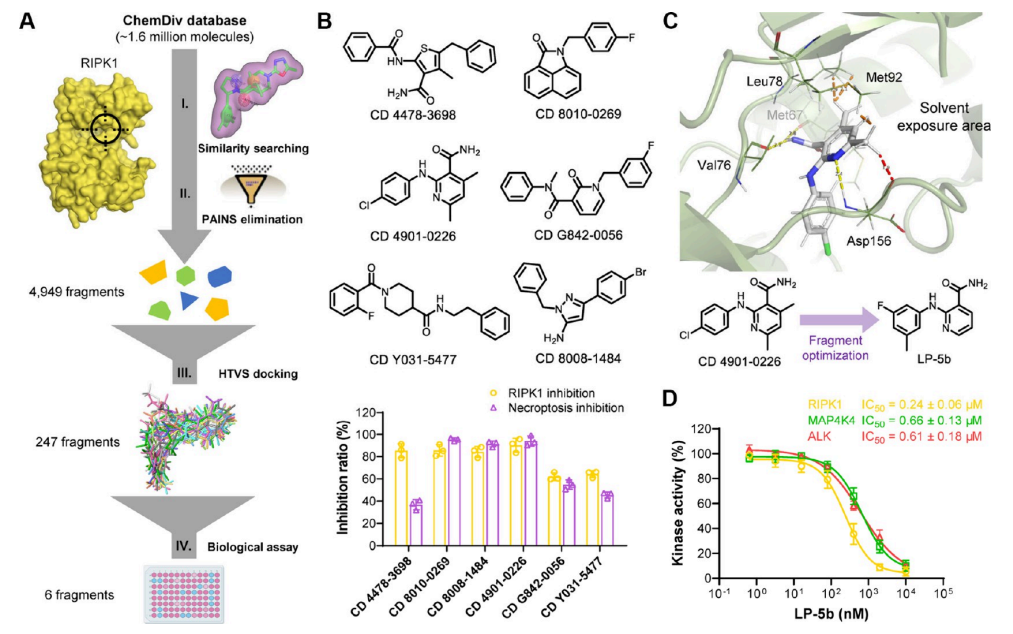
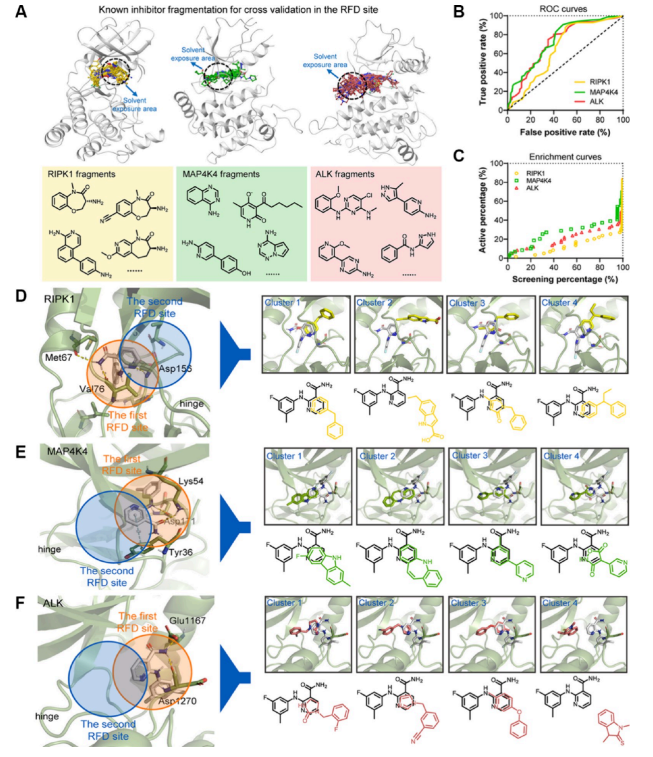
Customized high-throughput virtual screening was performed based on the structural architecture of RIPK1, yielding promising fragment compounds that were subsequently optimized to afford LP‑5b. Employing the RFD approach, the RFD binding site was identified via induced-fit docking, thereby validating the reliability of this method. Structure–activity relationship (SAR) studies conducted on the template MTDL LP‑1d ultimately pinpointed LP‑10d as the optimal ligand, exhibiting nanomolar potency against necroptosis in microglial cells.
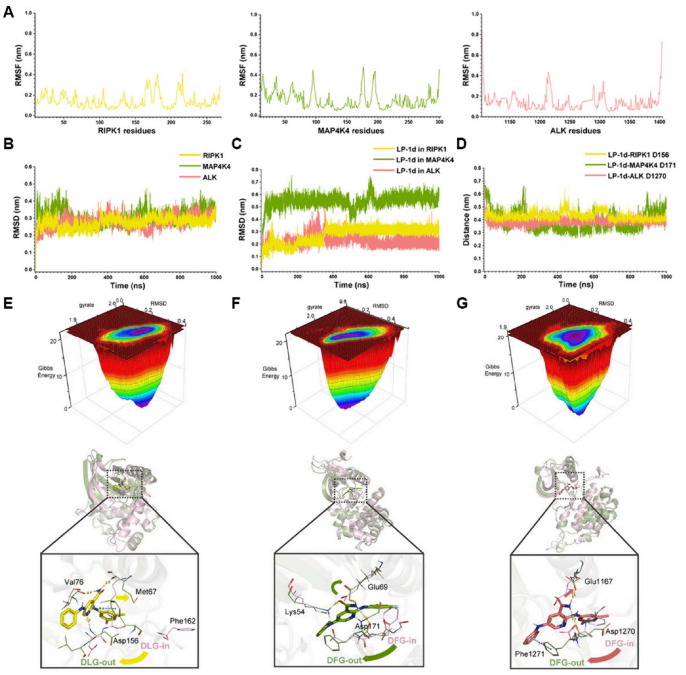
| Validation of LP-10d as a brain-penetrant compound targeting RIPK1, MAP4K4, and ALK.
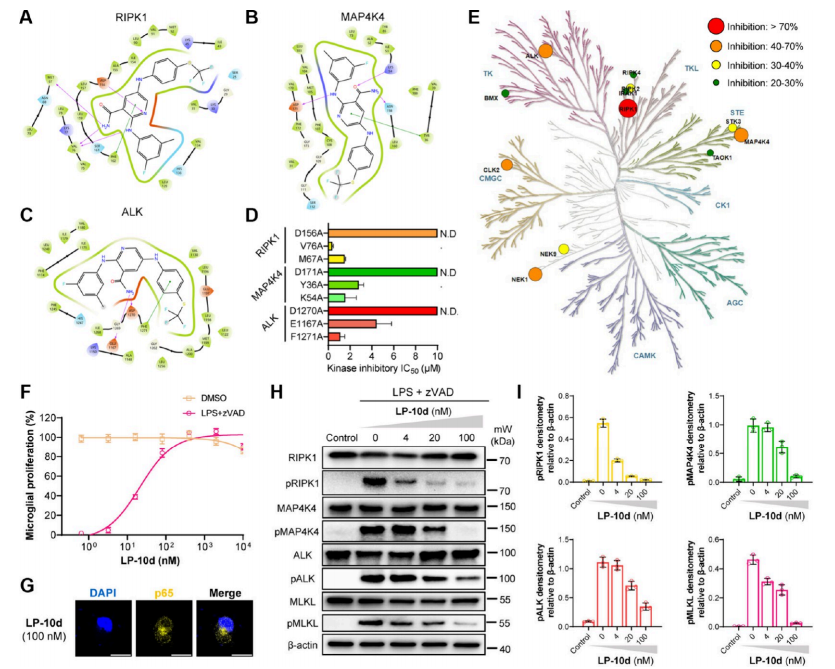
The authors found that LP-10d can directly bind to RIPK1, MAP4K4, and ALK, exhibiting favorable selectivity, safety, and pharmacokinetic (PK) properties, and effectively inhibiting necroptosis in microglial cells.
| LP10d rescues early cognitive deficits in an AD transgenic mouse model.
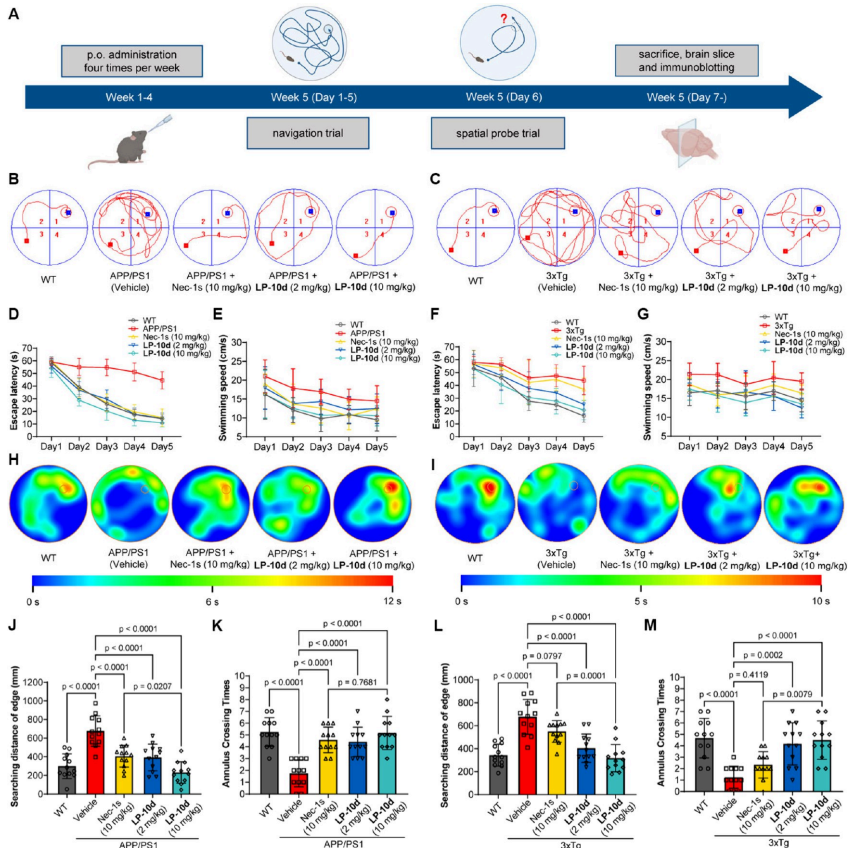
In the APP/PS1 and 3xTg mouse models, LP‑10d significantly improved spatial learning and memory, with efficacy surpassing that of Nec‑1s, suggesting that it can ameliorate or reverse early cognitive deficits in Alzheimer’s disease.
| LP-10d exhibits pleiotropic effects on multiple AD-like pathologies in 3xTg mice.
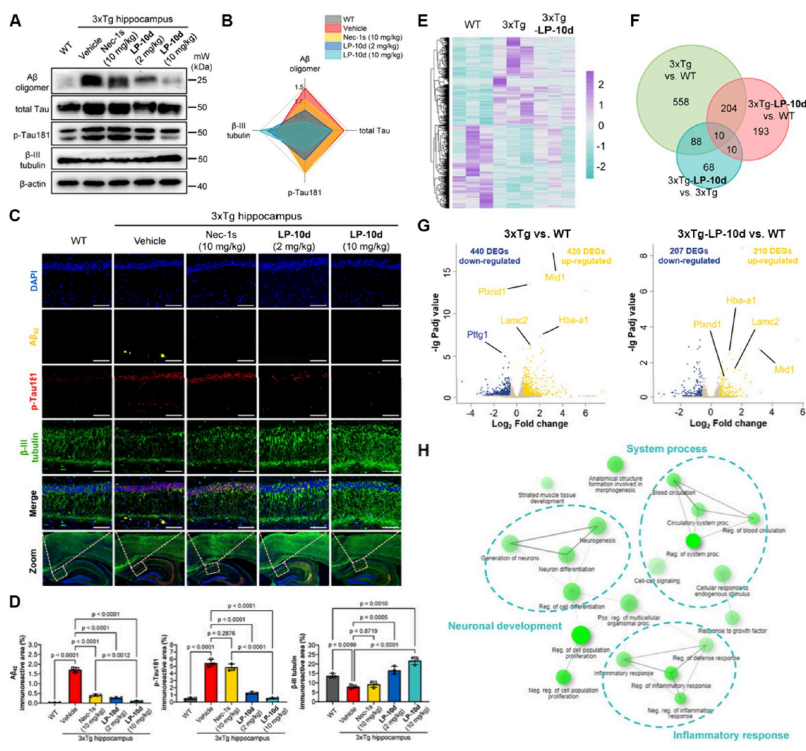
LP-10d reduces the phosphorylation of RIPK1, MAP4K4, and ALK in the hippocampus of 3xTg mice, ameliorates microglial necroptosis, modulates the levels of Aβ oligomers, p‑Tau181, and β‑III tubulin, exerts anti‑inflammatory effects, and regulates the expression of relevant genes, thereby demonstrating a multitarget pharmacological profile.
Summary
Currently, multi‑target drug design faces numerous challenges. Fragment‑based drug discovery (FBDD) and phenotypic screening hold promising potential, yet rational approaches for designing drugs targeting more than two distinct targets remain scarce. In this study, leveraging the necroptotic phenotype of microglia and the RFD method, we designed a multi‑target ligand, LP‑10d, that simultaneously engages RIPK1, MAP4K4, and ALK. This compound demonstrated robust efficacy in an Alzheimer’s disease mouse model, offering an innovative strategy for multi‑target drug discovery.
The 5-month-old double-transgenic APPswe/PSEN1dE9 (APP/PS1) mice and the 8-month-old triple-transgenic PS1M146V/APPswe/tauP301L (3xTg) mice used in the experiments, along with their littermate wild-type (WT) control mice, were all provided by Aniphe BioLab.
Aniphe BioLab Inc.
Address:
Runcheng, No. 8 Longtai Road, Jiangbei New Area, Nanjing City, Jiangsu Province
Building 8, Science Park
Postal Code: 210007
Phone:025-8520 8061
Email:info@aniphebio.com(Consultation)
Email:order@aniphebio.com(Order)


WeChat Official Account
Video Account
 Su Public Security Bureau Internet Information Service Filing No. 32010402001421