————————
The transverse aortic constriction (TAC) model is a well-established surgical model of hypertrophic cardiomyopathy. The TAC model is established by constricting the aortic arch, enabling… It simulates cardiac hypertrophy resulting from increased cardiac workload and the transition from compensatory mechanisms to chronic heart failure, resembling human heart failure caused by hypertension or aortic valve stenosis.
Performing transverse aortic constriction (TAC) surgery in rats and mice to induce ventricular hypertrophy and heart failure requires greater surgical expertise and technical skill than other methods. Below, we introduce Aniphe BioLab. Minimally invasive method for establishing a transverse aortic coarctation (TAC) model without ventilator support ↓
Mouse TAC modeling method
01 Mice were anesthetized and immobilized in the supine position.
02 Incise the skin of the neck and chest, and create an incision at the second intercostal space along the left upper sternal border.
03 Insert a chest retractor to widen the incision, dissect the thymus, and expose the aortic arch and its branches.

Image source: Aniphe BioLab
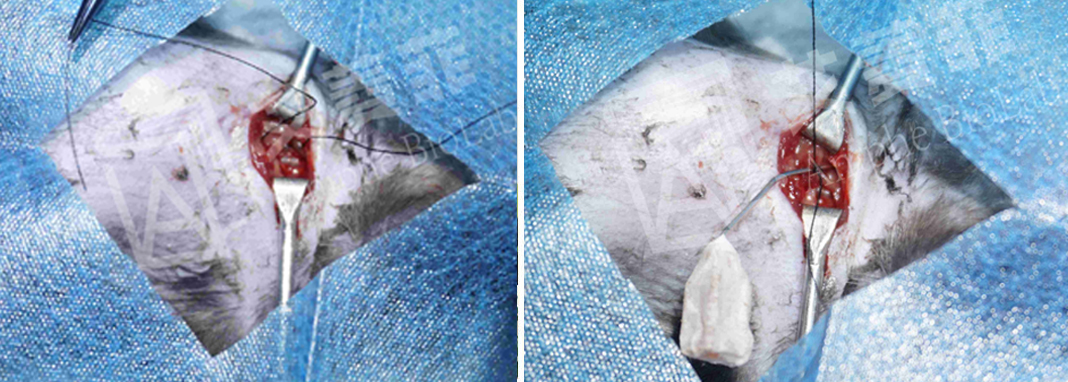
Image source: Aniphe BioLab
Following TAC surgery, mice typically develop cardiac hypertrophy within 1–2 weeks; by 4 weeks, marked cardiac enlargement is evident, with significant increases in the heart-to-body weight ratio and the heart-to-tibial length ratio, consistent with a myocardial hypertrophy phenotype. 。

Image source: Aniphe BioLab
Echocardiogram results:
Compared with the control group, the mice exhibited significantly reduced cardiac contractile function, marked thickening of the left ventricular wall, and significant increases in both the systolic diameter and internal diameter of the left ventricle, along with a substantial rise in left ventricular mass—features consistent with a myocardial hypertrophy phenotype.
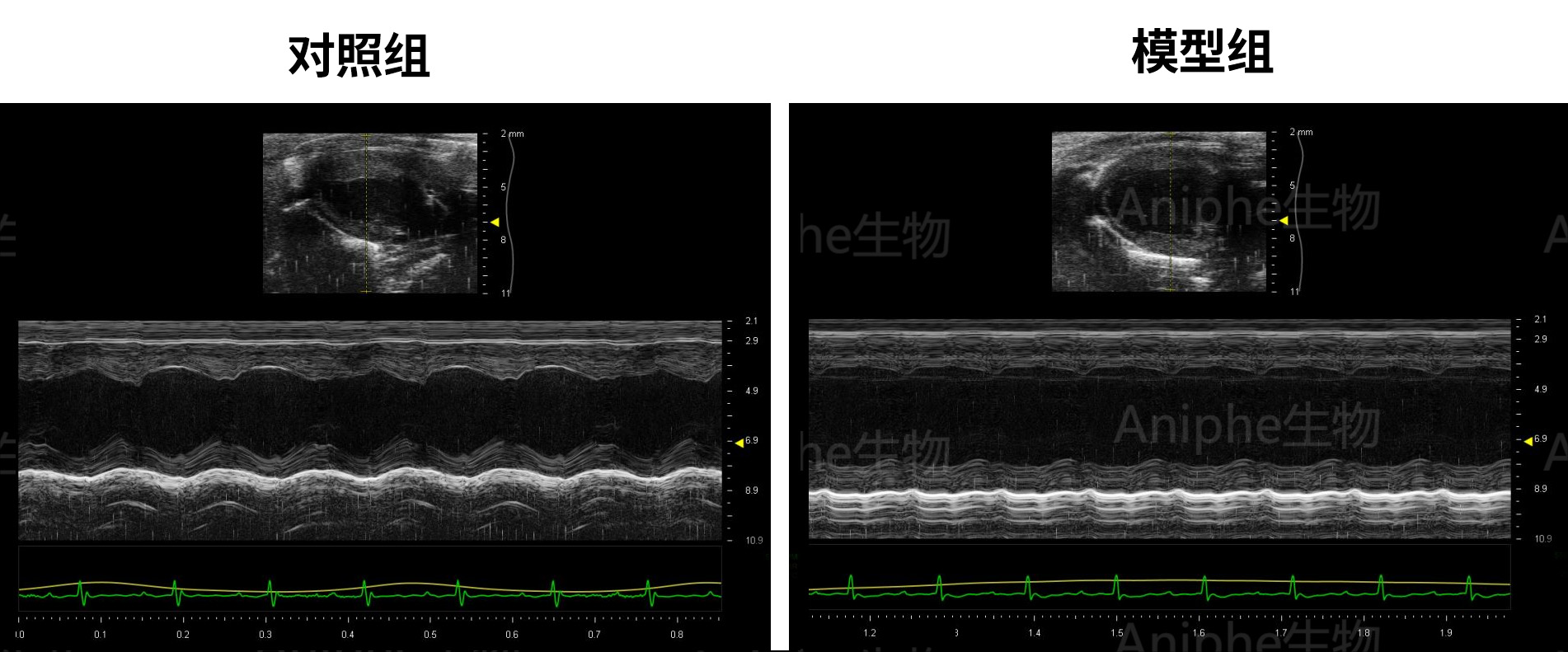
Image source: Aniphe BioLab
In vitro analysis of the hearts from mice subjected to TAC modeling revealed a significant increase in cardiac volume, thickening of the ventricular walls, and mild myocardial fibrosis.

Image source: Aniphe BioLab
————————————
What are the advantages of the non‑invasive minimally invasive surgical approach compared to the ventilator‑based method?
01 No need to use a small-animal ventilator.
In the absence of mechanical ventilation, the incidence of severe airway‑related complications, such as laryngeal edema and asphyxia caused by tracheal intubation, is reduced.
02 Does not damage the sternum
Because the intercostal approach does not injure the sternum, it avoids damage to the thoracic wall vessels, significantly reduces intraoperative blood loss, and provides a clear surgical field.
03 Minimally invasive surgery features small incisions and minimal tissue trauma.
The chest closure and skin suturing procedures are straightforward, resulting in markedly improved postoperative outcomes compared with the conventional technique. There is no thoracic deformity, and the animals exhibit rapid recovery, low perioperative mortality, excellent reproducibility, and a high success rate.
04 The method is easy to perform.
This method can be performed using only basic surgical instruments, and a skilled operator can complete the TAC procedure within 5 minutes.
Precautions
The construction of the rat aortic arch constriction model is similar to that in mice and requires… Select the appropriate model based on the rat’s body weight. Suture and Padding needle. Compared with mice, establishing a model in rats is somewhat more challenging, as the rat aortic arch lies deeper and is harder to locate.
In addition, during the model‑establishment process, the following points should also be taken into account:
01 Without ventilator support, anesthesia should not be too deep; the animal’s responsiveness should be diminished, but strong stimulation of the extremities should still elicit a response.
02 When performing sternal incision, the first cut should be slightly biased to the right, and the second cut must not extend beyond the second rib; otherwise, pneumothorax may easily occur.
03 During thymus dissection, maneuvers should be gentle to avoid excessive traction that could damage the pleura. If the pleura is inadvertently injured, the resulting change in intrathoracic negative pressure will cause lung collapse, leading to immediate death of the animal.
04 When passing the suture beneath the aortic arch, avoid inserting it too deeply; otherwise, there is a risk of perforating the pulmonary artery or the pleura, leading to massive hemorrhage or pneumothorax.
05 The tension applied during aortic arch ligation should not be excessive; it should be just sufficient to allow the pledget‑suture needle to be withdrawn smoothly. Otherwise, the aortic wall may be torn during ligation, or the aortic arch may be damaged when the pledget‑suture needle is removed.
06 Do not house the animal with others until it has fully regained consciousness, to prevent chest injuries and bleeding caused by being trampled.
References:
[1] Fan Juan, Ren Anjing. Establishment of a mouse model of cardiac hypertrophy induced by aortic arch constriction without ventilator support [J]. Journal of Naval Medical University, 2022, 43(07):784-787. DOI: 10.16781/j.CN31-2187/R.20210974.
[2] Zhai Meng’en, Li Buying, Duan Weixun, et al. Comparison between the modified minimally invasive aortic arch coarctation model and the classical model in mice [J]. Chinese Journal of Extracorporeal Circulation, 2015, 13(03): 174–177. DOI: 10.13498/j.cnki.chin.j.ecc.2015.03.13.
——————————
Jiangsu Aniphe BioLab Inc., established in 2018, is committed to becoming an internationally renowned preclinical pharmacodynamic evaluation company in the new era of biopharmaceutical development. Aniphe BioLab has built a comprehensive SPF‑grade laboratory animal facility that integrates animal breeding and husbandry, disease model development, and animal experimentation, covering areas such as oncology, neuroscience, and metabolism.
The facility houses more than 5,000 mouse and rat cages. Leveraging a highly skilled technical team and an extensive array of animal resources, Aniphe BioLab offers a wide range of disease‑specific animal models, including cerebral ischemia–reperfusion models in rats and mice (MACO/R), myocardial infarction and myocardial ischemia models (MI), transverse aortic constriction (TAC) models, patient‑derived xenograft (PDX) tumor models, cell‑line‑derived xenograft (CDX) tumor models, spinal cord injury (SCI) models, epilepsy models, and Alzheimer’s disease (AD) models. We also provide pharmacological and efficacy evaluation services tailored to these disease models. We warmly welcome all clients to contact us for more information!


 Su Public Security Bureau Internet Information Service Filing No. 32010402001421